2020 North Indian cyclone season
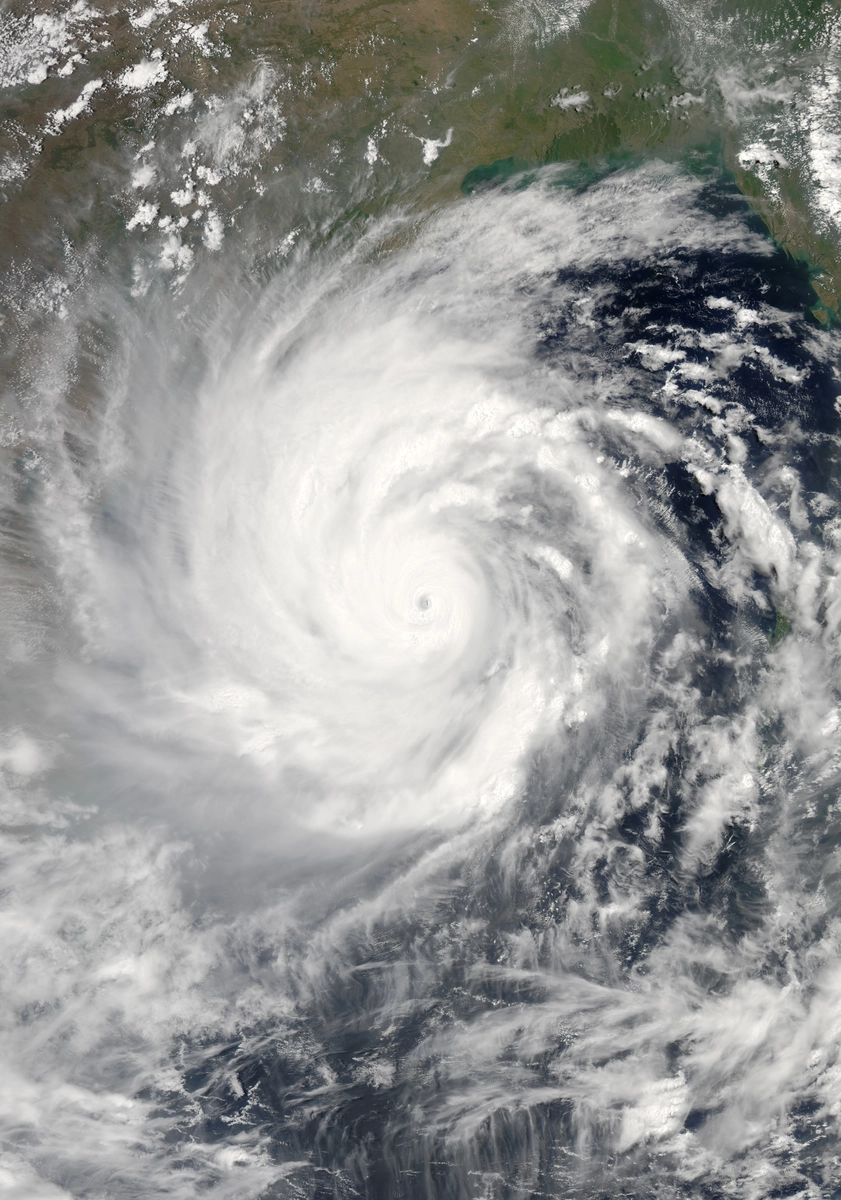
Cyclone Amphan 2020
Recorded track and intensity from May 15, 2020 to May 21, 2020

Drag to pan. Pinch or Ctrl/⌘ + scroll to zoom. Keyboard: plus or minus to zoom, arrow keys to pan, and 0 to show the full track.
167 mph
May 18, 2020 during the tropical stage
Full archive record, including non-tropical stages if present
Along the recorded center positions
STORM HISTORY
Track and intensity summary
Amphan is listed in the North Indian basin for the 2020 season. Its archived track begins on May 15, 2020, 06:00 AM UTC at 9.5°N, 87.5°E. The first observation lists sustained winds of 23 mph. These dates describe the available observations, which may include stages before and after the tropical cyclone phase.
The first Category 5 observation appears on May 18, 2020, 06:00 AM UTC. The highest recorded tropical-stage one-minute sustained wind is 167 mph, first recorded on May 18, 2020, 12:00 PM UTC at 14.1°N, 86.4°E. The minimum recorded tropical-stage central pressure is 901 hPa on May 18, 2020, 12:00 PM UTC.
The full record spans 150 hours and approximately 1,290 mi along the recorded center positions. The last recorded position is 25.4°N, 89.6°E on May 21, 2020, 12:00 PM UTC.
IMPACT
Reported impact
| Deaths | 106 |
|---|---|
| Areas affected | Bangladesh, India, Sri Lanka |
Further reading
QUICK ANSWERS
Amphan in brief
What was Cyclone Amphan's highest wind speed?
167 mph, the highest one-minute sustained wind in its tropical stage, recorded on May 18, 2020, 12:00 PM UTC.
What category was Cyclone Amphan?
Category 5 at its peak on the Saffir–Simpson one-minute wind scale, first reaching Category 5 on May 18, 2020, 06:00 AM UTC. Other agencies classify storms differently.
What was Cyclone Amphan's lowest pressure?
901 mb, the minimum central pressure recorded during its tropical stage, on May 18, 2020, 12:00 PM UTC.
When did Cyclone Amphan occur?
The archived track runs from May 15, 2020, 06:00 AM UTC to May 21, 2020, 12:00 PM UTC, with the tropical stage from May 15, 2020, 12:00 PM UTC to May 21, 2020, 12:00 PM UTC.
Where did Cyclone Amphan form?
In the North Indian basin, in the 2020 season. Its first archived position is 9.5°N, 87.5°E on May 15, 2020, 06:00 AM UTC.
Did Cyclone Amphan make landfall?
The archive places its center over land at 1 recorded position; the strongest is 109 mph on May 20, 2020, 12:00 PM UTC. Positions are six-hourly, so this is not a landfall chronology.
How many people died in Cyclone Amphan?
106 deaths are recorded by Wikidata.
METHODOLOGY
Data sources and limitations
The map and summary are generated from NOAA's IBTrACS v04r01 archive. Wind and category use US-agency records; minimum pressure is calculated during the tropical stage, with the archive's pressure source retained. Category 5 refers to the Saffir–Simpson one-minute wind scale; local agencies may use different classifications. Coastlines use Natural Earth's 1:10m land data.
Track distance adds great-circle distances between consecutive observations, excluding gaps over 12 hours. This track has no gaps over 12 hours. The line shows the storm's center, not its size, rainfall or flood extent. Converted wind speeds are rounded to the nearest whole unit.
Archive retrieved
NOAA IBTrACS archive and Field documentation
Sources & methodology